Review of Nnormal Kjerag 1.0 trail running shoes
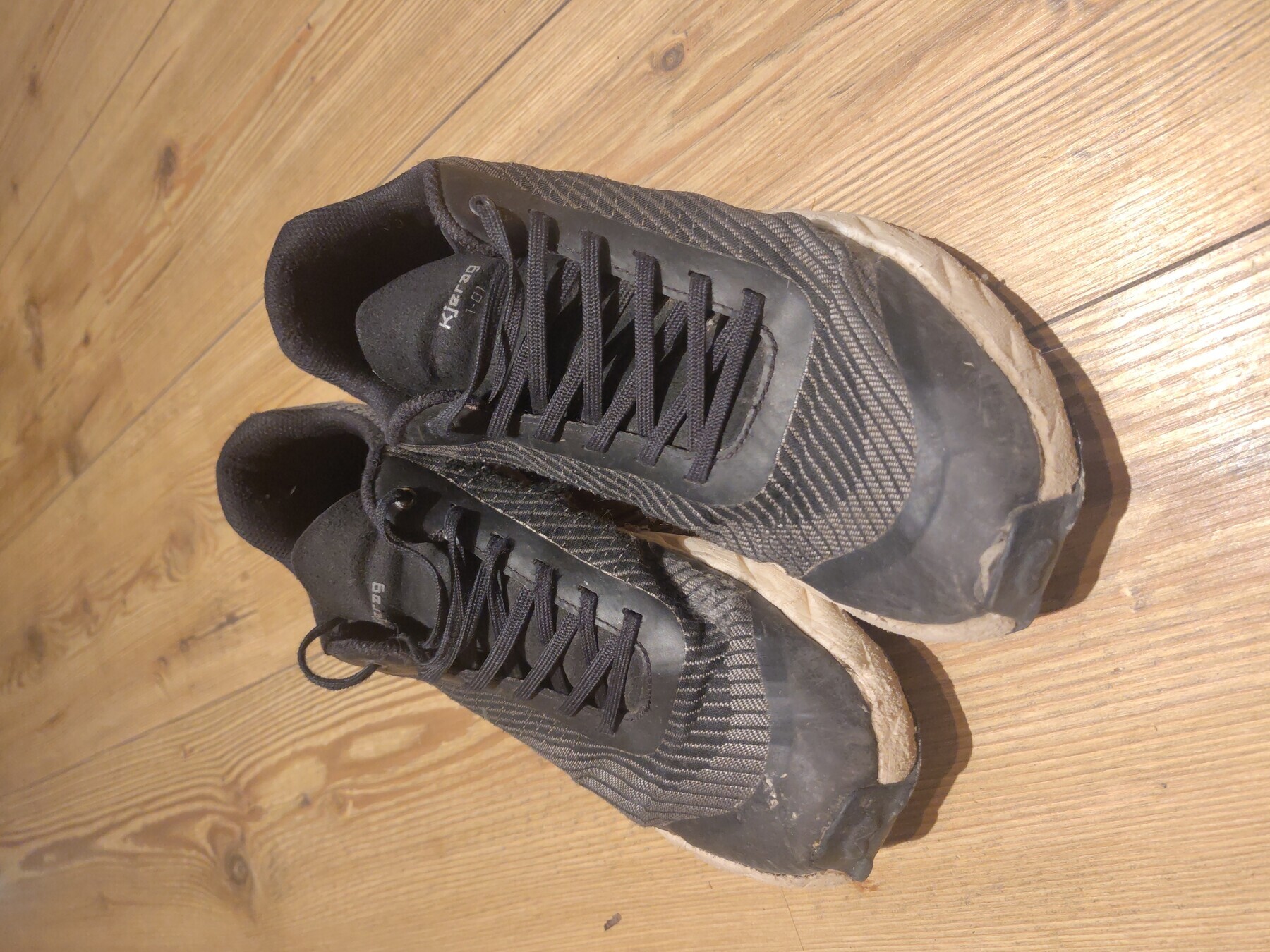
Nnormal Kjerag 1.0 was the first trail running shoe made by the shoe brand Nnormal, launched by Kilian Jornet and the company Camper in 2022. This particular model has been my main racing shoe since 2023, and I've used it for trail and mountain races ranging from 2 to 100 kilometers. This post will be a short review of the shoe – or perhaps more of a "this is how the shoe looks after three years" situation report.
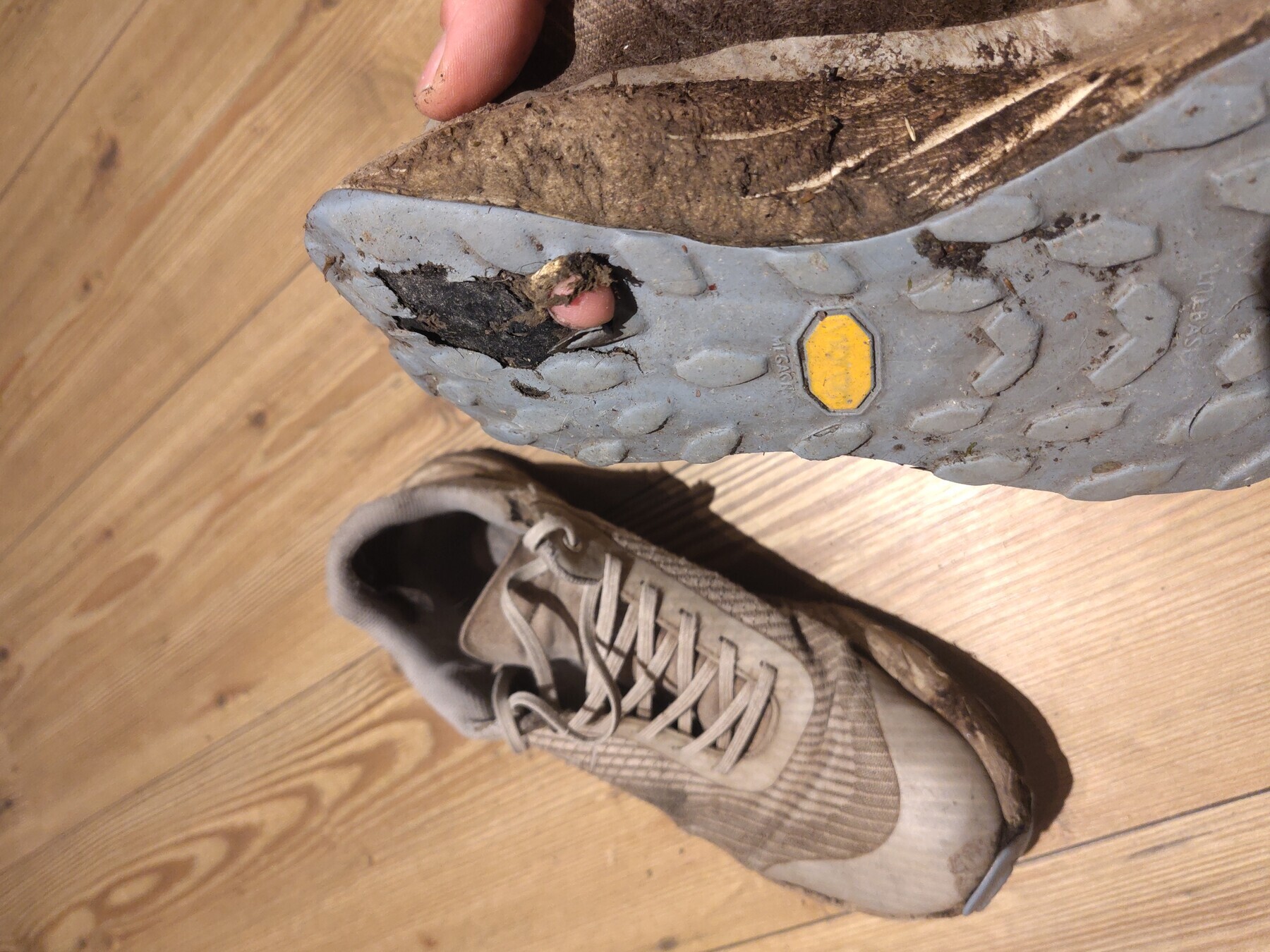
Below are pictures of how my oldest pairs of Kjerag looks at the moment. Notice how worn the outer sole is, while the upper has no holes or tears. The Matryx material they use for the upper is really impressive, given that this shoe has put up with a lot of off-trail running in rocky terrain and scree. This is my only pair of running shoes that have sustained "mountain usage" without eventually getting tears in the upper.
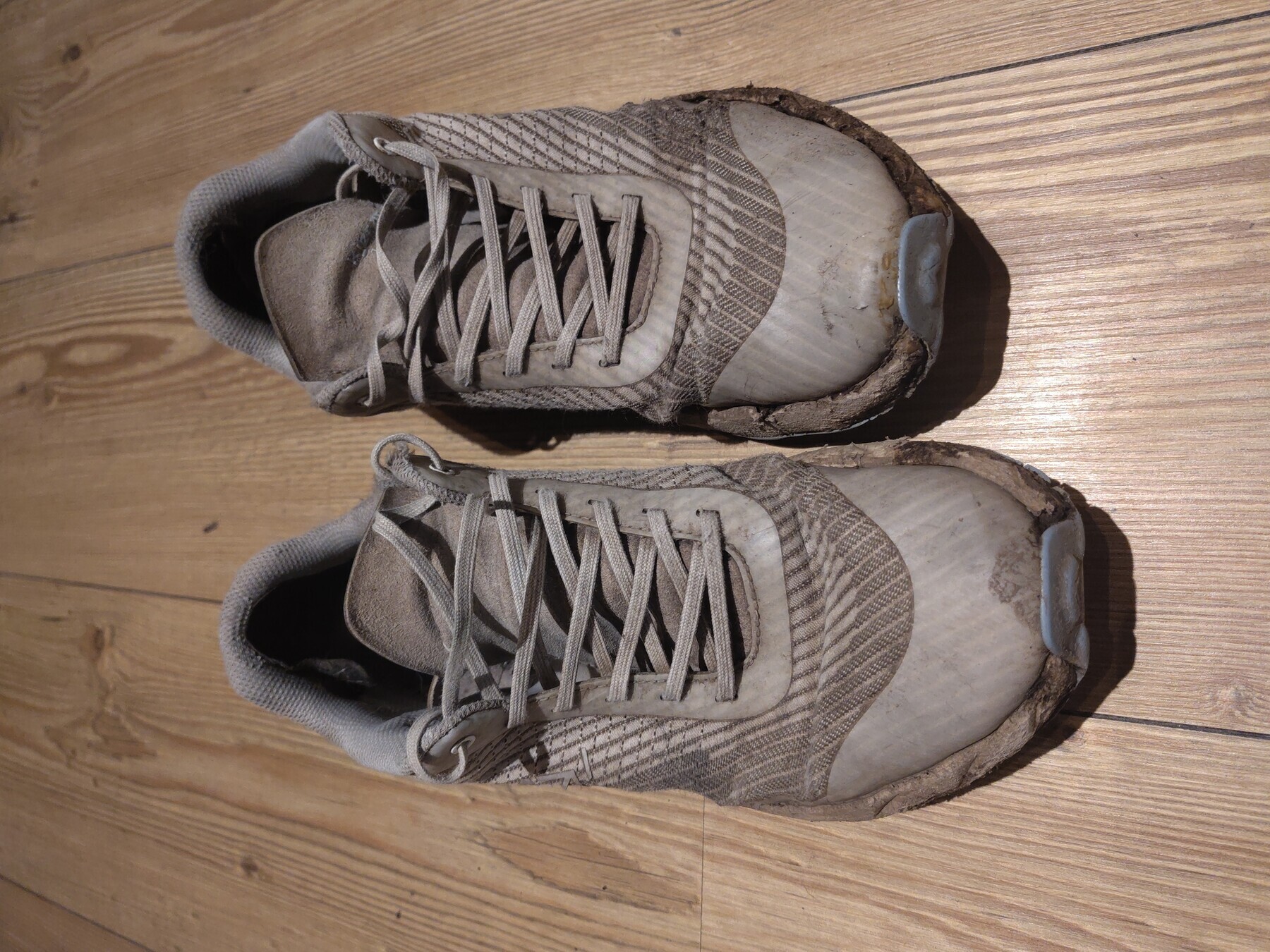
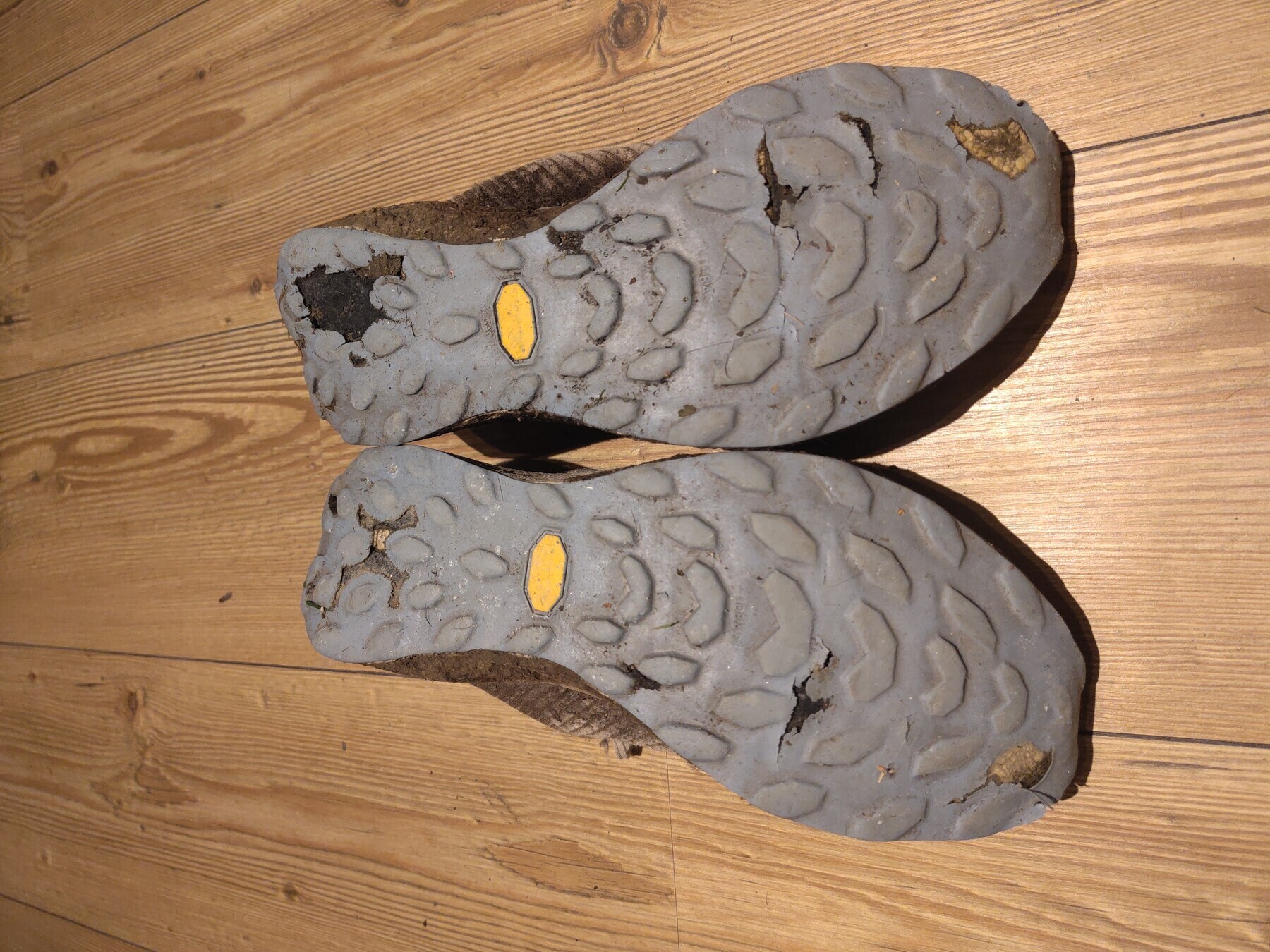
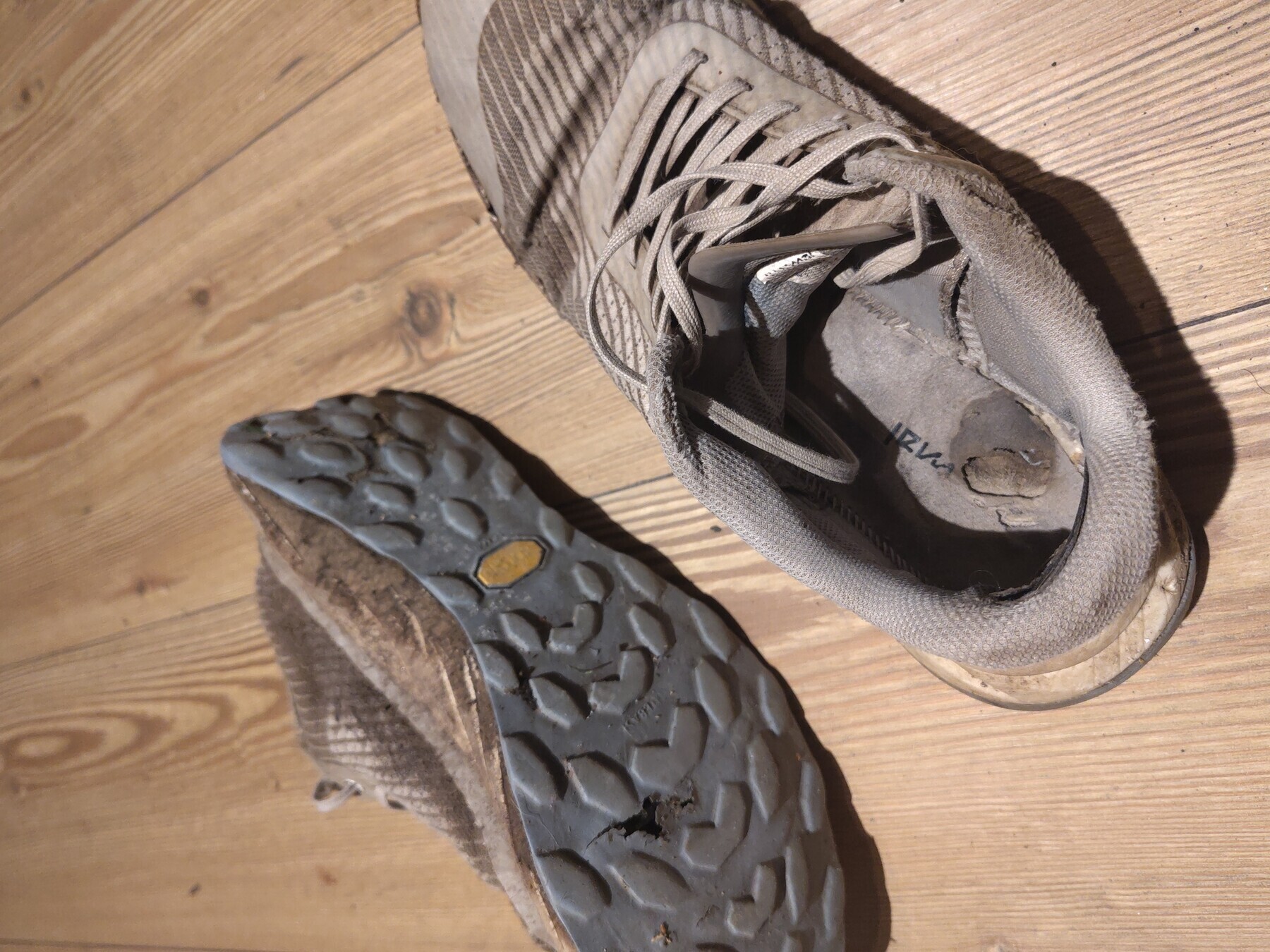
I've done two repairs of the shoe: 1) Inserted small patches in the inside of the heel, to stop the heel lining from wearing out, and 2) glued the front of the outer sole, which over time started to fall off. The material on the edges around the ankle has torn up a bit, but it doesn't seem to be an escalating problem.
As you can see below, the midsole and outer sole have taken quite a beating, and there's not so much left—I can even put my finger through the shoe. I still use these for daily training, as I'm not so dependent on cushioning.
For the sake of this review, I wished I'd tracked the mileage of the shoe, to give a better quantitative impression of the durability to expect. If I had to guess, I would say at least 1200 km or more. It has been used almost solely on trails and gravel road, with very little asphalt running (otherwise the outer sole would probably be gone by now).
I have previously used a lot of Salomon and Arc´teryx shoes in EU size 43 1/3. For Kjerag, I have sized down to 42 2/3, and it is a quite tight fit. My ideal size is probably in between these two sizes, but for technical running, I find it's better that the shoe sits closely on the foot. As always, try on the shoe before buying. Ideally visit a store with a treadmill, and run a few minutes in them.
The problem with giving reliable reviews is what I call the paradox of useful product reviews: When you have used a product long enough to know how durable it is, whether it works well in all relevant conditions, and in general if it is worth the money, the product most likely has gone out of production. This is the case of Kjerag 1.0, which now has been superseded by the Kjerag 2.0. The new version has 2.5 mm thicker midsole, weighs 14 grams more1, and uses "Matryx Light Jaquard" instead of "Matryx Jacquard" for the upper material (who knows what the difference may be). I assume that these changes make little difference in practice, but so far I'm happy with the three pairs of Kjerag 1.0 I have in rotation for training and racing. It looks like it's going to be a while until I need to buy another pair.
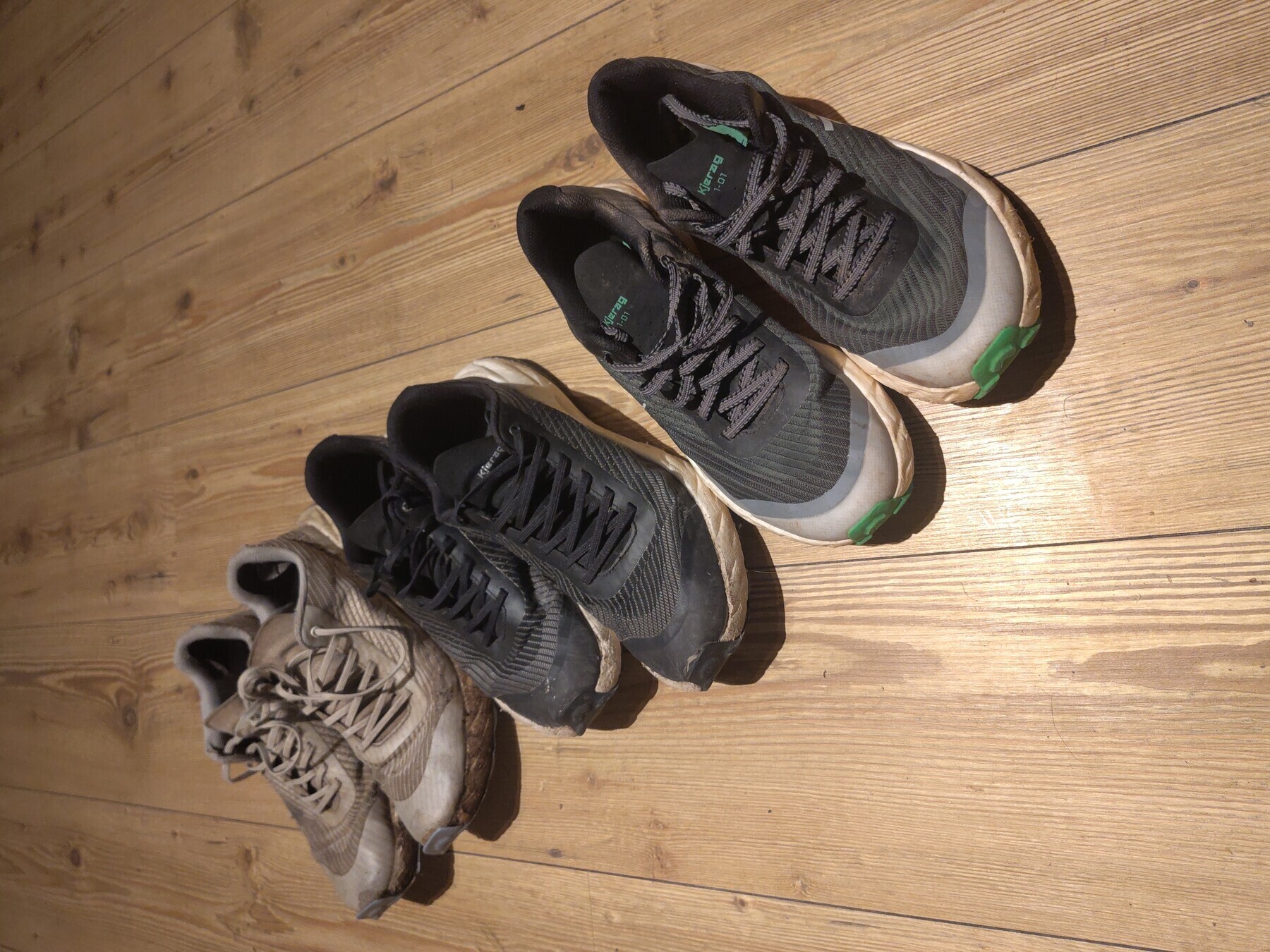
Overall, these are the most durable running shoes I've owned. I wish they'd added 1 mm of thickness to the outer sole, to make it last even longer. I guess it comes down to a question of weight, and that most people replace their shoes because of a "collapsed" midsole before the outer sole is worn down. For me, the running "feel" and fit is excellent, but that doesn't matter for anyone else. You have to try it on to know whether it works for you. That's why I mainly report on durability – the rest depends on your foot, gait, and individual preferences.